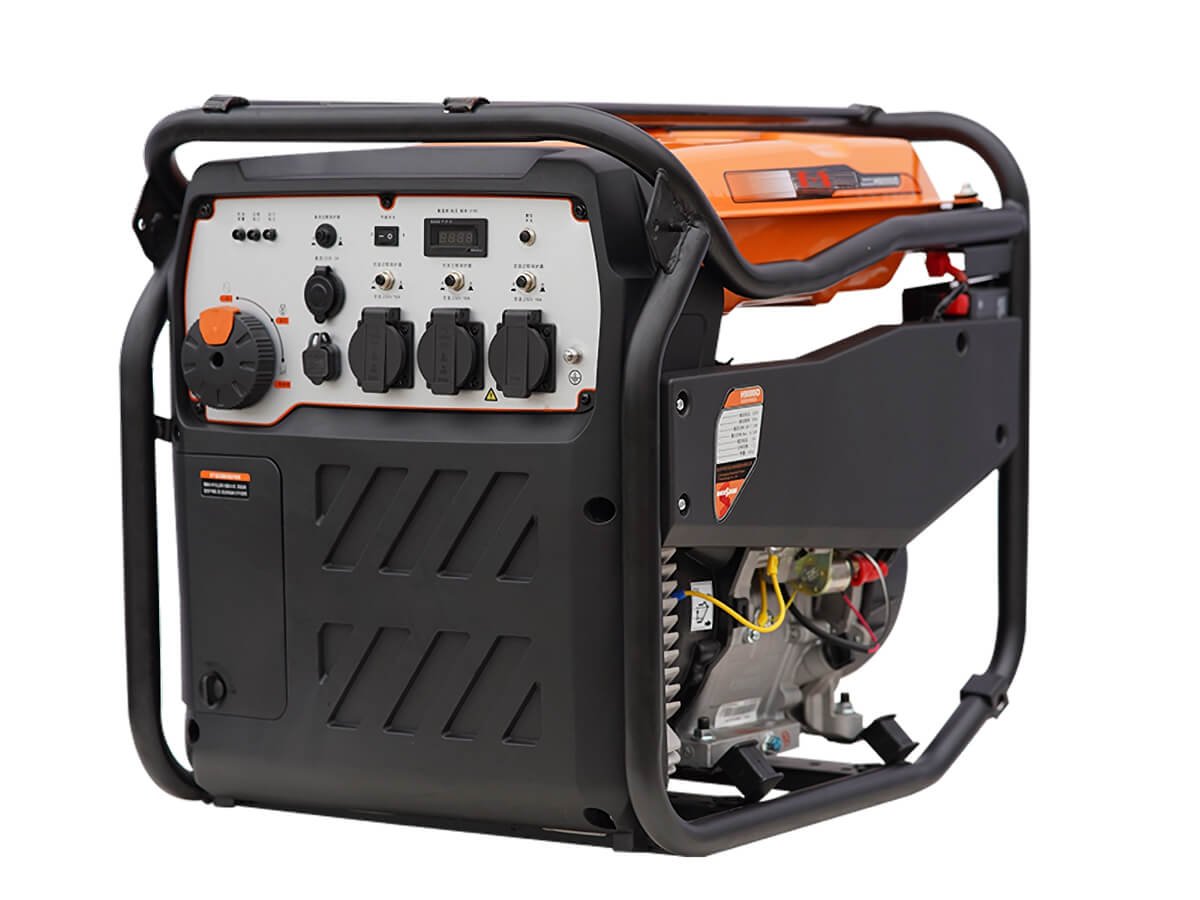
Imagine having reliable power at your fingertips, whether you're off-grid camping, preparing for a home blackout, or powering tools at a remote job site. Modern portable generators, especially those boasting advanced Portable Generator Features: Inverter, Remote Start & More, have revolutionized how we access power on demand. Gone are the days of noisy, gas-guzzling machines that were too loud for a campsite and risky for sensitive electronics. Today’s options offer a blend of convenience, efficiency, and quiet operation that makes them truly indispensable.
This guide dives deep into the features that matter most, helping you understand how inverter technology delivers clean power, why remote start is a game-changer, and what other crucial elements to consider before you invest.
At a Glance: What You'll Learn
- Inverter Generators Reign Supreme: They produce clean, stable power (under 3% THD) ideal for sensitive electronics, operate quietly, and are fuel-efficient.
- Remote Start is a Game-Changer: Start and stop your generator from a distance, perfect for convenience in all conditions.
- Watts Matter Most: Understand the difference between starting and running watts to properly size your generator.
- Noise Levels are Key: Look for generators under 65 dBA for comfortable use in most environments.
- Safety First: Modern generators include vital features like CO detection and low oil shutdown.
- Dual Fuel Offers Flexibility: Run your generator on gasoline or propane for extended versatility.
- Maintenance Extends Life: Simple oil changes and proper fueling keep your unit running strong.
The Heart of Modern Power: Inverter Technology Explained
If there's one feature that has transformed the portable generator landscape, it's inverter technology. Unlike traditional generators that produce raw, "dirty" AC power, inverter generators deliver clean, stable electricity, mimicking the power you get from your wall outlets. This "pure sine wave" power, typically with less than 3% Total Harmonic Distortion (THD), is crucial for safely powering sensitive electronics like laptops, smartphones, and medical equipment without risk of damage.
What Makes Inverters So Special?
Think of it this way: a conventional generator runs its engine at a fixed speed to produce power, regardless of the load. An inverter generator, however, employs a sophisticated alternator connected to a rectifier that converts AC power into DC, then back to AC using an inverter. This complex dance allows the engine speed to fluctuate based on the power demand, leading to several significant advantages:
- Clean Power Output: As mentioned, this is the biggest differentiator. You can plug in your delicate devices without a second thought.
- Quieter Operation: Because the engine doesn't constantly run at full throttle, inverter generators are significantly quieter. Many operate below 60 dBA, making them ideal for camping, tailgating, or residential backup where noise pollution is a concern. The Westinghouse iGen4500c, for example, boasts a super quiet 52 dBA at idle, while the Champion 4500-Watt unit operates at a respectable 61 dBA.
- Superior Fuel Efficiency: Variable engine speed means less fuel consumption. When demand is low, the engine slows down, saving gasoline and extending run times. This also reduces emissions.
- More Compact and Lighter: Inverter generators often have a more enclosed design, making them easier to transport and store. Models like the Champion 4250-Watt Open Frame Inverter are specifically designed to be lighter and more portable.
- Parallel Capability: Many inverter generators can be linked together using a parallel kit, effectively doubling your power output without buying a single, much larger unit. This provides flexibility; you can use one for smaller jobs or combine them for bigger tasks.
When you're evaluating your power needs, particularly if you're looking for something that can handle a wide range of devices, understanding this technology is paramount. For a deeper dive into making the right choice for your household, consider exploring a guide on Choosing the best portable home generator.
Power at Your Fingertips: The Magic of Remote Start
Convenience isn't just a buzzword when it comes to portable generators—it's a critical feature that can save you time, effort, and even a trip into the rain. Enter remote start, a function that lets you power up or shut down your generator from a comfortable distance, often with a simple press of a key fob button.
Imagine it: it’s pouring rain outside, and your power just went out. Instead of bundling up to trek to the generator, you can simply hit a button from inside your home, and it whirs to life. Or perhaps you're setting up camp and want to get power flowing to your RV before you even step outside. This hands-off approach transforms the user experience.
How Remote Start Works & What to Look For:
Most remote start systems utilize a wireless key fob that communicates with the generator's control panel. The range can vary significantly between models. For instance, the Champion 4500-Watt Wireless Remote Start Inverter Generator allows control from up to 80 feet, which is ample for most backyard or campsite setups. The Westinghouse iGen4500c takes it a step further, offering an impressive range of up to 260 feet (or 109 yards), which can even work through walls, including concrete.
When considering a remote start generator, pay attention to:
- Start Options: Beyond remote, do you also get electric push-button start (another convenient feature, especially for larger units) and a traditional recoil (pull cord) start as a backup? Most modern units offer all three for maximum reliability.
- Range: Does the advertised range suit your typical use case? If your generator will be placed far from your primary operating area, a longer range is beneficial.
- Fob Durability: Is the key fob robust enough to withstand outdoor conditions, or will it be safely stored indoors?
The added layer of convenience that remote start provides is hard to overstate. It’s not just a luxury; it’s a practical enhancement that improves safety and usability, especially when dealing with adverse weather or when the generator is placed in a less accessible location.
Decoding the Numbers: Watts, Noise, and Run Time
Choosing the right portable generator isn't just about features; it's about understanding the core specifications that dictate its performance. Watts, noise levels, and fuel efficiency are three critical numbers you'll encounter, and knowing what they mean will help you match a generator to your specific power needs.
Power Output: Starting Watts vs. Running Watts
This is arguably the most important specification. Generators are rated by two types of wattage:
- Starting Watts (Surge Watts): This is the maximum power a generator can produce for a brief period (usually a few seconds) to start motor-driven appliances like refrigerators, air conditioners, or power tools. These appliances require an initial burst of power to get going, which can be 2-3 times their running wattage.
- Running Watts (Rated Watts): This is the continuous power a generator can supply to keep appliances running after they've started.
Practical Example: A 13,500 BTU RV air conditioner needs at least 3000 running watts, but its starting wattage could be much higher. A 15,000 BTU AC unit typically requires at least 4000 running watts. To be safe, it's often recommended to multiply your appliance's running wattage by 1.25 to build in a safety margin. Always list out all the appliances you plan to run simultaneously, calculate their total running watts, and then identify the highest starting wattage among them to ensure your generator can handle the load. To help ensure you're getting the sizing right for your needs, dive into a resource like getting the sizing right for your needs.
Noise Levels: Finding Your Quiet Zone
Noise is a significant factor, especially for recreational use or in residential areas. Generator noise is measured in decibels (dBA), and the lower the number, the quieter the operation.
- Under 60 dBA: Whisper-quiet, comparable to a normal conversation. Ideal for campgrounds, tailgating, or close to your home. The Westinghouse iGen4500c (52 dBA at idle) is a prime example of a quiet performer.
- 60-70 dBA: Still quiet enough for most outdoor activities without being overly disruptive. The Champion 4500-Watt Inverter (61 dBA) and Pulsar 4000 Watt Dual Fuel (63 dBA) fall into this excellent range.
- Above 70 dBA: These are generally conventional generators and can be quite loud, more suitable for construction sites or areas where noise isn't a primary concern. The Champion 7500-watt conventional generator, for instance, would be significantly louder than its inverter counterparts.
Fuel Type and Efficiency: Going the Distance
Most portable generators run on gasoline, but dual fuel options are becoming increasingly popular for their versatility.
- Gasoline: Widely available, but fuel can degrade over time and emits carbon monoxide.
- Propane (LPG): Burns cleaner, stores longer, and can be more convenient if you already use propane for grilling or heating. Dual fuel models like the Pulsar 4000 Watt Inverter Generator offer the flexibility to switch between gasoline and propane, which can be a lifesaver if one fuel source is scarce. The Westinghouse WGen7500 also has a dual fuel version available.
Fuel efficiency directly impacts run time. A generator's run time is typically listed at a specific load (e.g., 50% load). The Westinghouse iGen4500c, with its 3.4-gallon tank, can run up to 18 hours in ECO mode, showcasing impressive fuel efficiency. The Champion 4500-Watt unit, with a 2.3-gallon tank, runs up to 14 hours. Always compare run times at similar load percentages and tank sizes to get an accurate picture.
Beyond the Basics: Essential Features You Can't Ignore
While watts and remote start might grab headlines, a truly useful portable generator package includes a suite of other features designed for safety, ease of use, and adaptability. Don't overlook these often-crucial elements.
Safety First: Protecting You and Your Equipment
Modern generators come equipped with vital safety features that should be non-negotiable:
- Carbon Monoxide (CO) Detection and Auto Shutoff (CO Shield): Carbon monoxide is a colorless, odorless, and deadly gas. Features like Champion's CO Shield or Westinghouse's CO auto shut-off sensor detect dangerous levels of CO and automatically shut down the generator, preventing potential tragedies. This is paramount for any generator use.
- Low Oil Shutdown: Running an engine without sufficient oil can cause catastrophic damage. This feature senses when oil levels are too low and shuts down the engine to protect it from seizing, saving you costly repairs and extending the life of your unit.
- Overload Protection: Prevents damage to the generator and connected appliances if too much power is drawn.
Portability & User-Friendliness: Hauling and Operating with Ease
A "portable" generator should actually be portable. Consider:
- Weight and Frame Design: Lighter is almost always better. Open-frame inverters, like the Champion 4250-Watt unit, are about 20% lighter than traditional models.
- Wheels and Handles: A built-in wheel kit and a sturdy handle (telescoping handles are a bonus for compact storage) make a significant difference in maneuverability. The Westinghouse iGen4500c and Pulsar 4000 Watt both feature wheel kits and telescoping/suitcase-style handles.
- Digital Displays: An LED data center or Intelligauge provides real-time information on fuel levels, power output, run time, voltage, and hours, making it easier to monitor your generator's status.
- Intuitive Control Panel: Clear, well-labeled controls simplify operation, especially in stressful situations like a power outage.
RV Compatibility: Powering Your Home on Wheels
For RV owners, specific outlets are a must. Most RVs use a 30 Amp service (TT-30R outlet) or a 50 Amp service.
- 30A RV Outlet: Many portable inverter generators, such as the Champion 4500-Watt, Westinghouse iGen4500c, and Pulsar 4000 Watt, come RV-ready with a 30A TT-30R outlet, perfect for common travel trailers that draw up to 3600 watts.
- 50A RV Needs: Larger 50A RVs can draw up to 12,000 watts, which is typically beyond the capacity of most portable generators. However, adapters can allow you to power some appliances or circuits using a smaller generator. Always ensure your generator's wattage matches your RV's needs to avoid overloading.
Dual Fuel Flexibility: A Smart Power Play
As touched upon earlier, dual fuel generators like the Pulsar 4000 Watt offer the distinct advantage of running on either gasoline or propane. This flexibility can be incredibly useful, providing options when one fuel type is unavailable or if you simply prefer the cleaner burn and longer storage life of propane. For a deeper look into the advantages of dual-fuel models, check out advantages of dual-fuel models. This adaptability adds a significant layer of resilience to your power strategy.
Spotlight on Top Performers: Remote Start Inverter Generators
Let's take a closer look at some of the best remote start inverter generators on the market, highlighting what makes each a strong contender.
- Champion 4500-Watt Wireless Remote Start Inverter Generator: A popular choice known for its balance of power (4500 starting, 3500 running watts), quiet operation (61 dBA), and excellent run time (14 hours on 2.3 gallons). Its CO Shield system and 30A RV plug make it a solid all-rounder. Remote start works up to 80 feet.
- Westinghouse iGen4500c (4000 Peak Watt Portable Inverter Generator): Often lauded for its exceptionally quiet operation (52 dBA at idle) and impressive 18-hour run time on a 3.4-gallon tank. It offers 4500 peak watts and 3700 running watts with <3% THD. Its remote start boasts an incredible 260-foot range, plus electric push-button and recoil start. Features like the digital LED display, telescoping handle, and RV-ready outlet enhance its appeal.
- Westinghouse 5000 Peak Watt Super Quiet Inverter Generator: If you need a bit more power from an inverter, this unit delivers 5000 peak watts and 3900 rated watts, still maintaining <3% THD. It shares many features with its smaller sibling, including remote start, electric start, telescoping handle, and an RV-ready 30 Amp outlet.
- Champion 4250-Watt Wireless Remote Start Generator (Open Frame Inverter): For those prioritizing weight and space, this open-frame design offers 4250 starting watts and 3500 running watts. It's about 20% lighter and 50% quieter than traditional models, operating at 64 dBA. Its remote start/stop from 80 feet and economy mode add to its efficiency.
- Pulsar 4000 Watt Dual Fuel Inverter Generator: The ultimate in flexibility, this generator can run on gasoline (4000 peak watts) or propane (3600 peak watts). It includes remote start (80 feet), electric, and recoil options, and runs for 15 hours at 50% load on gasoline with a 3.2-gallon tank. Its 63 dBA noise level, 30A RV outlet, and parallel capability make it a highly versatile choice.
When Bigger Power Calls: Remote Start Conventional Generators
While inverter generators excel in efficiency and clean power, sometimes you just need raw, unadulterated power for heavy-duty tasks or extensive home backup. This is where conventional generators with remote start come into play. They typically offer much higher wattage output but come with trade-offs in noise and fuel efficiency.
- Westinghouse WGen7500: A powerhouse generating 7500 running watts and 9500 peak watts. It features a robust remote electric start that works up to an impressive 109 yards (327 feet). With a large 6.6-gallon fuel tank, it can run for up to 16 hours. While not an inverter, its sheer power and remote start capability make it a strong option for larger home backup needs. A dual fuel version is also available.
- Champion 7500-watt generator: Offering 7500 running watts and 9375 surge watts, this is another heavy-hitter for substantial power demands. It also includes remote start up to 80 feet and a variety of outlets, including a 30A twist lock and a 50A outlet, making it suitable for larger applications. It runs up to 8 hours at 50% load on a 6-gallon tank.
These conventional units are typically heavier (around 200 pounds for both the Westinghouse and Champion 7500W models) and louder, but they deliver the brute force required for situations where total wattage trumps quiet operation or ultra-clean power.
Keeping Your Powerhouse Primed: Maintenance & Fuel Insights
A generator is an investment, and like any engine, it requires proper care and feeding to ensure longevity and reliable performance. Neglecting basic maintenance or using the wrong fuel can lead to frustrating breakdowns when you need it most.
Oil: The Lifeblood of Your Engine
Choosing the right oil and changing it regularly are crucial:
- Oil Type: For most portable generators, 5W-30 synthetic oil is recommended for all temperatures, even below -10°F. If you're consistently operating above freezing temperatures, 10W-30 oil is a suitable alternative. Always check your owner's manual for specific recommendations.
- Oil Change Frequency: The first oil change is the most critical: perform it after the initial 30 hours of run time to clear out any manufacturing debris. After that, plan to change the oil every 100 hours of operation or at least once a year, whichever comes first. This simple step can dramatically extend your generator's lifespan. Keeping your portable generator in top shape includes routine checks and timely oil changes, which you can read more about in keeping your portable generator in top shape.
Fueling Safely and Smartly
- Refueling Protocol: Always turn off your generator and let it cool for at least two minutes before attempting to refuel. Never refuel a hot or running generator; this is a significant fire hazard.
- Gasoline Type: Use unleaded fuel with a minimum 87 octane rating. Avoid E85 or any fuel with more than 10% ethanol, as high ethanol content can damage small engines and fuel systems over time.
- Fuel Stabilizer: If you plan to store gasoline for more than a month or store your generator with fuel in the tank for an extended period, add a fuel stabilizer. This prevents fuel degradation, gumming, and corrosion.
Addressing Your Burning Questions: Portable Generator FAQs
We've covered a lot, but a few common questions always seem to pop up. Let's tackle them directly.
What's the real difference between Inverter and Conventional Generators?
Inverter generators produce cleaner AC power (typically <3% THD), are significantly quieter, lighter, and more fuel-efficient. They also often feature ECO mode and parallel capability. Conventional generators are usually more powerful for heavy-duty tasks but are louder, heavier, and produce "dirtier" power less suitable for sensitive electronics.
When should I use or avoid ECO Mode?
ECO mode is fantastic for fuel savings and reducing noise by adjusting engine speed to match power demand. However, you should turn off ECO mode when starting high-wattage appliances (like an RV AC unit or a power tool with a high starting wattage) or when you're running devices close to the generator's full capacity. This ensures the generator has enough immediate power to handle the surge without bogging down.
How far does remote start work, and does it work through walls?
Remote start ranges vary, from around 80 feet (e.g., Champion) to an impressive 260 feet/109 yards (e.g., Westinghouse iGen4500c). Yes, they are designed to work through common obstacles like walls, including concrete, as long as the generator is within its specified range and there isn't excessive interference.
Are portable generators waterproof? Can I run them in the rain?
No, generators are NOT waterproof. You should never run a generator in the rain, snow, or wet conditions without proper protection from the elements. Exposure to moisture can damage electrical components and create a severe electrocution hazard. Always operate your generator under a canopy, in an open-sided shelter specifically designed for generator use, or in a dry, well-ventilated area. Absolutely never run a generator indoors, in a garage, or inside an attached shed, due to the extreme danger of carbon monoxide poisoning. For additional guidelines on safe operation, familiarize yourself with essential generator safety tips.
What's the smallest remote start generator available?
Based on the models reviewed and common market offerings, the Champion 4500-Watt Portable Inverter Generator is often noted as one of the most lightweight and smallest units available that still includes reliable remote start functionality. Its compact design and built-in wheels make it highly portable.
Empowering Your Choice: Steps to Confident Selection
Navigating the world of portable generator features can feel overwhelming, but by focusing on your specific needs, the decision becomes much clearer. Here's a quick roadmap to confidently choosing your next power companion:
- Assess Your Power Needs: List every appliance you plan to run simultaneously. Calculate total running watts and identify the highest starting wattage. This will tell you the minimum wattage you need.
- Prioritize Clean Power (Inverter vs. Conventional): If sensitive electronics are on your list, an inverter generator is non-negotiable. For pure brute force for tools or non-sensitive items, a conventional unit might suffice.
- Embrace Convenience: If you value ease of use, especially in challenging conditions, remote start and electric start are invaluable features.
- Consider Your Environment: Noise levels are critical for camping, tailgating, or residential backup. Opt for models under 65 dBA for comfort.
- Think Fuel Flexibility: A dual fuel generator offers peace of mind and options, especially for longer outages or varied scenarios.
- Don't Skimp on Safety: Always choose a generator with CO detection and auto shutoff, as well as low oil shutdown.
- Evaluate Portability: If you'll be moving it frequently, look for lighter models with wheels and sturdy handles.
By considering these features and understanding their benefits, you’re not just buying a generator; you’re investing in reliable, convenient, and safe power for whatever life throws your way.