When the lights go out unexpectedly, it's more than just an inconvenience. A power outage can mean spoiled food, a cold house, no internet, and for some, a threat to essential medical equipment. That's why having a reliable backup power source is no longer a luxury, but a vital layer of home protection. If you're looking for peace of mind, a Portable Home Generator Buying Guide is your first step toward dependable power.
This guide will walk you through everything you need to know to choose the right portable generator for your home, ensuring you're prepared for whatever nature (or the grid) throws your way.
At a Glance: Your Portable Generator Checklist
- Safety First, Always: Never run a gas generator indoors. Ensure you have CO detectors and position your generator at least 20 feet from your home.
- Size It Right: Calculate your essential wattage needs. A typical home often needs 5,000 watts for critical items.
- Know Your Types: Portable, inverter, and portable power stations offer different benefits in terms of mobility, noise, and fuel.
- Fuel Matters: Gasoline is common but requires careful storage. Propane is cleaner, while solar/battery is emission-free for indoor use.
- Smart Features Save Stress: Look for automatic CO shutoff, electric start, and low-oil shutoff.
- Connect Safely: A transfer switch or interlock kit is crucial for connecting to your home's electrical panel.
Why a Portable Generator is Your Home's Next Essential Upgrade
Power outages are on the rise, increasing in both frequency and duration due to aging infrastructure, extreme weather events, and growing demand. Beyond the obvious disruption to daily life, a lack of power carries real costs and risks:
- Financial Drain: Food spoilage in a dark refrigerator, potential flooding from an inoperable sump pump, or the inability to work from home all hit your wallet.
- Safety & Comfort: No lights, no heating or AC, and no way to charge phones. For those relying on electrically powered medical devices, a continuous power supply is critical.
- Connectivity: In today's world, losing WiFi means losing connection to news, emergency services, and loved ones.
A portable generator directly addresses these concerns, providing the flexibility to power crucial appliances and systems when the grid goes dark.
Generator Safety: Your Absolute Top Priority
Before you even think about brands or wattages, you must understand generator safety. Operating one improperly can have deadly consequences, primarily from carbon monoxide (CO) poisoning. Treat these guidelines as non-negotiable:
- Outdoors Only, Always: This cannot be stressed enough. Never operate a gas-powered generator in an enclosed space—not a garage, not a shed, and certainly not indoors. Carbon monoxide is an odorless, colorless gas that can kill you and your family in minutes.
- Maintain Your Distance: Position the generator at least 20 feet from your home and any other structures, including your neighbors' houses. Always direct the exhaust away from any buildings or windows. For the generator itself, ensure at least 5 feet of clear space around it to prevent overheating and fire.
- Install CO Detectors: Crucial as a backup, ensure your home has working carbon monoxide detectors, especially if you plan to use a generator. Many modern portable generators come equipped with a built-in CO sensor that triggers an automatic shutoff if dangerous levels are detected. Consumer Reports strongly recommends portable generators that pass their expanded CO safety technology test (certified by ANSI/UL2201 or ANSI/PGMA G300).
- Handle Fuel Safely: Gasoline should always be stored in approved containers. Use a fuel stabilizer if you're storing gasoline for extended periods to prevent clogging and fire hazards. Never refuel a hot generator or one near warm objects, as this can easily lead to a fire.
- Read the Manual: This isn't just advice; it's a critical safety step. Familiarize yourself with your specific generator's operation, maintenance schedule, and safety features before an emergency strikes. You don't want to be fumbling with instructions in the dark.
Sizing Your Generator: The Wattage Game
The most common question in a Portable Home Generator Buying Guide is "What size do I need?" Generators are measured by their power output in watts. Your goal is to match the generator's output to the cumulative wattage of the devices you want to power.
While a general estimate for essential home items often lands around 5,000 watts, your specific needs might differ. Here's how to figure it out:
- List Your Essentials: Walk through your home and make a list of everything you absolutely need to run during an outage. Think critical items: refrigerator, some lights, phone chargers, medical devices, sump pump, WiFi router.
- Find the Wattage: For each item, check the label or owner's manual for its wattage. If you only see amps, multiply amps by 120 (standard household voltage) to get an estimate (Watts = Amps x Volts).
- Sum It Up: Add the wattages of all the devices you plan to run simultaneously. This total is your target wattage.
- Consider Starting Watts (Optional but useful for motors): Many motor-driven appliances (like refrigerators or sump pumps) require a momentary surge of "starting watts" that can be 2-3 times their "running watts." While the provided data focuses on running watts, if you have several motor-heavy items, you might need a generator with a higher surge capacity. For simplicity and based on the provided ground truth, stick to the running wattages for your initial sum.
Wattage Estimates for Common Home Devices:
| Appliance | Estimated Running Watts (Range) |
| :------------------------- | :------------------------------ |
| Aquarium | 50-1,200 watts |
| Ceiling fan | 65-175 watts |
| Coffee maker | 600-1,200 watts |
| Computer (Desktop/Laptop) | 10-300 watts |
| Dryer | 2,000-6,000 watts |
| Lights (per bulb) | 5-80 watts |
| Microwave | 700-1,500 watts |
| Portable heater | 750-1,500 watts |
| Refrigerator | 500-1,000 watts |
| Sump pump | 750-1,500 watts |
| Television (42-inch) | 200-300 watts |
| Toaster oven | 1,000-1,200 watts |
| Vacuum cleaner | 300-1,500 watts |
| Washing machine | 500-1,200 watts |
| Water heater | 4,000-5,000 watts |
| Well pump | 750-1,000 watts |
| Window air conditioner | 400-1,200 watts |
Quick Example: If you want to run your refrigerator (800W), a few lights (5x60W = 300W), your WiFi router (50W), and charge a laptop (100W), you'd need approximately 800 + 300 + 50 + 100 = 1,250 watts. A 3,000-watt portable generator would easily cover this, giving you room for other items.
Remember, larger generators offer more power but also come with trade-offs: they're heavier, consume more fuel, and take up more storage space. Balance your needs with practicality.
Demystifying Generator Types: Which One is Right for You?
While this is a portable generator guide, understanding the broader landscape helps contextualize your choices. Here's a look at the main types:
1. Portable Generators (The Focus of This Guide)
These are the workhorses for temporary home backup, tailgating, and job sites. They're designed for mobility, though their size and weight can vary significantly.
- Mobility: Easy to move around thanks to wheels and handles.
- Fuel: Primarily run on gasoline, which requires careful storage (stabilizer is a must for long-term). Some models are dual-fuel, running on both gasoline and liquid propane, which is a cleaner-burning option.
- Power Output: Consumer Reports tested models range from 3,000 to 8,500 watts, making them suitable for powering essential circuits or multiple key appliances.
- Cost: Generally affordable, ranging from $400 to $3,000.
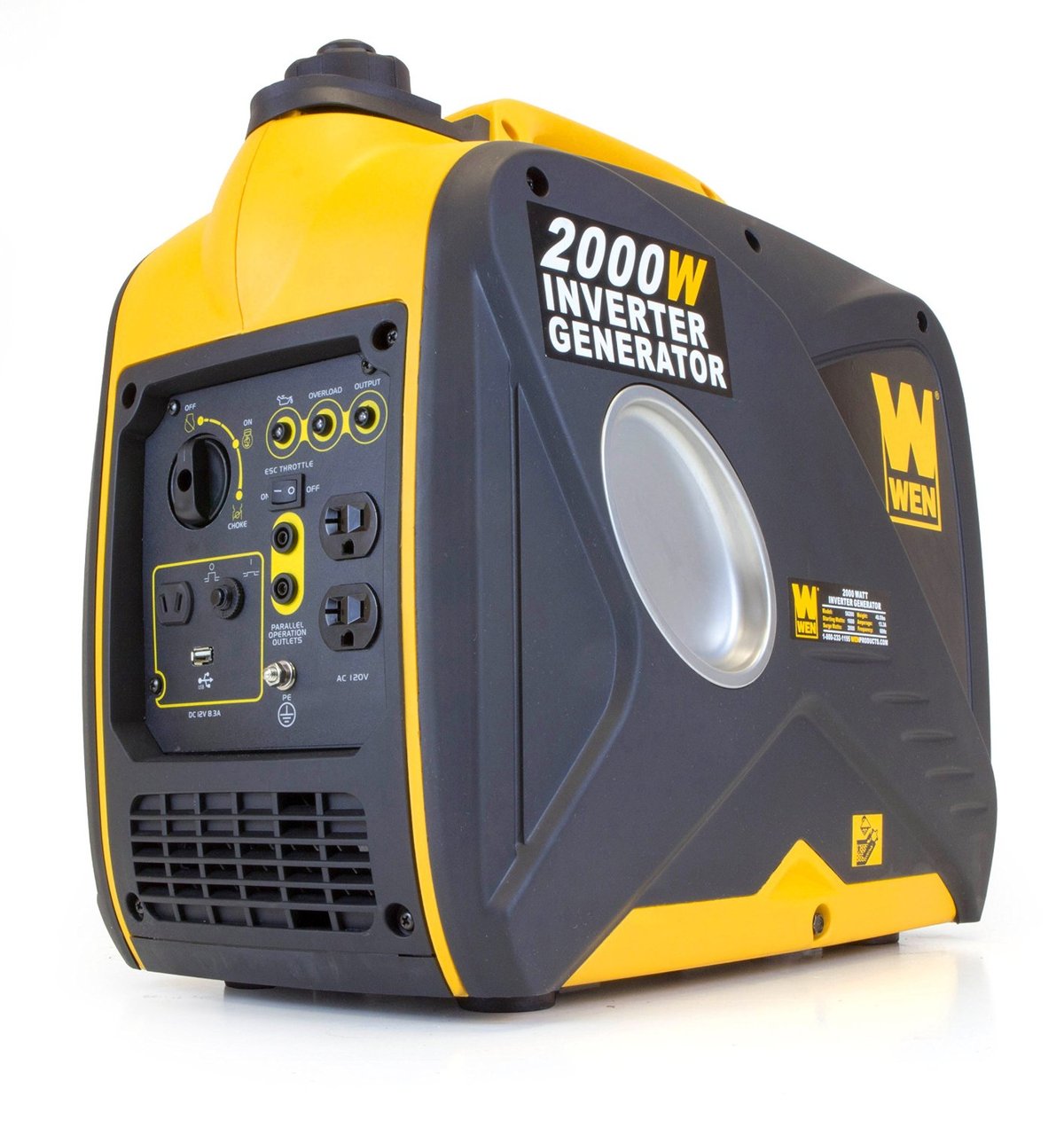
2. Inverter Generators (The Quieter, More Efficient Portable)
Think of inverter generators as the sophisticated cousins of traditional portable generators. They're also portable but offer distinct advantages.
- Noise Level: Significantly quieter. Instead of running at a constant high RPM, their engines throttle up or down to match the power demand, and they often have advanced exhaust systems. You can usually have a conversation nearby without shouting.
- Fuel Efficiency: Because they adjust engine speed, they consume less fuel, leading to longer run times on a single tank. This also means fewer emissions, though they still require strict CO safety precautions.
- Clean Power: Inverters produce "clean" or "pure sine wave" power, which is safer for sensitive electronics like laptops, smartphones, and medical devices.
- Size: They come in a wide range, from lightweight, suitcase-sized units (as little as 30 lbs) perfect for camping to larger models (over 250 lbs) that can provide substantial home backup power.
- Power Output: CR tested models typically offer 900 to 7,600 watts.
- Cost: Generally more expensive than traditional portable generators of comparable output, ranging from $400 to $5,000.
3. Portable Power Stations (The Emission-Free Alternative)
Also known as "solar generators" (though they don't generate power from the sun directly, but rather store it), these are large rechargeable batteries.
- Use Case: Ideal for apartments, camping, or shorter-term power needs where gas generators aren't feasible due to noise or emissions. They can be used indoors.
- Power Source: Charged via a standard electrical outlet or, more commonly, with optional solar panels. No gas, propane, or diesel needed.
- Noise/Emissions: Extremely quiet with no engine, and produce zero fuel emissions or carbon monoxide, making them the safest indoor option.
- Limitations: Generally have lower sustained power output compared to gas generators, must be periodically recharged, and can be heavier and more expensive than small inverter generators for their capacity.
- Power Output: CR tested models provide 1,800 to 6,000 watts.
- Cost: $1,500 to $4,000.
4. Home Standby Generators (The "Set It and Forget It" Option)
While not portable, it's useful to know the ultimate backup solution for comparison. These are permanently installed and designed for whole-house power.
- Installation: Requires professional installation by a licensed electrician, permanently wired into your home's electrical system. Installation costs often double the unit's price (transfer switch install alone is $500-$900).
- Fuel: Typically run on natural gas (from your home's utility line, offering an unlimited supply) or propane (stored in a large tank).
- Operation: Automatic. They detect an outage, start up, and switch your home's power seamlessly, then shut down when grid power returns. Many also perform regular self-tests.
- Power Output: High output, usually 5,000 to 20,000 watts, capable of powering an entire home.
- Cost: $2,000 to $7,000 for the unit alone, before substantial installation costs.
For most homeowners seeking a flexible, cost-effective backup solution, a portable or inverter generator strikes the perfect balance. If you're weighing your options, diving deeper into specific models can help. You can explore our guide to the best portable home generators to see top-rated choices that might fit your needs.
Fueling Your Generator: Understanding Your Options
The type of fuel your generator uses directly impacts its convenience, run time, and environmental footprint.
- Gasoline: The most common fuel for portable generators.
- Pros: Readily available, high energy density.
- Cons: Has a limited shelf life (requires stabilizer for long-term storage), highly flammable, produces significant emissions.
- Propane (Liquid Propane - LP): Used in many standby generators and some dual-fuel portable models.
- Pros: Clean-burning (fewer emissions than gasoline), safer to store than gasoline, long shelf life in tanks.
- Cons: Less energy-efficient and powerful than gasoline or diesel, requires bulky tanks, can freeze in extremely cold temperatures.
- Diesel: More common for industrial and heavy-duty portable generators.
- Pros: Can be stored longer than gasoline, lower fire hazard than gasoline, very fuel-efficient.
- Cons: Diesel engines are generally louder and more expensive, fuel can gel in cold weather.
- Natural Gas: Exclusively for standby generators, tied directly into your home's natural gas line.
- Pros: Unlimited supply (no refueling), clean-burning, no storage tanks needed.
- Cons: Only for permanent installations, less energy-efficient than other fossil fuels.
- Solar (and Battery): The power source for portable power stations.
- Pros: Free, clean, and emission-free. Allows for indoor use.
- Cons: Dependent on sunlight (for solar charging), lower power output, limited run time by battery capacity, typically slower to "refuel" compared to liquid fuels.
For portable home generators, gasoline is dominant, with dual-fuel (gasoline/propane) options gaining popularity for their flexibility.
Essential Features to Look for in a Portable Generator
Beyond basic power output, certain features enhance safety, ease of use, and overall value.
- Automatic CO Shutoff: This is a life-saving feature. If the generator detects dangerous levels of carbon monoxide, it automatically shuts down the engine. As Consumer Reports emphasizes, this feature (certified by ANSI/UL2201 or ANSI/PGMA G300) should be a top priority for any portable generator you consider.
- Low-CO Engine: Some models are specifically designed to produce lower carbon monoxide emissions. While still requiring outdoor use, this offers an extra layer of safety.
- Electric Start: Say goodbye to wrestling with a pull-cord. An electric start (usually a push-button) makes starting your generator much easier, especially in an emergency. Be aware that the battery for electric start might be sold separately (~$50).
- Low-Oil Shutoff: Prevents costly engine damage by automatically shutting down the generator if the oil level drops too low.
- Multiple Outlets: Four or more outlets on a portable generator allow you to distribute the electrical load more effectively, reducing the risk of overloading a single outlet or extension cord.
- Fuel Gauge: A simple but invaluable feature that helps you monitor fuel levels, so you don't run out unexpectedly during an outage.
- Alternative Fuel Capacity (Dual-Fuel): If you opt for a model that can run on both gasoline and propane, you gain flexibility and potentially a cleaner-burning, longer-storing fuel option.
- Noise Level: Generators are loud, but some are significantly quieter than others. Quieter models (like inverter generators) run around 50-60 decibels (like a normal conversation), while louder ones can reach 90-100 decibels (like a lawnmower or motorcycle). If your generator will be running for extended periods, or if you have close neighbors, noise level is a major consideration.
- Removable Console: Some advanced models offer a removable console that lets you plug in appliances without needing to run extension cords outdoors, which can be convenient for managing power from a safer distance.
Connecting Your Portable Generator: Transfer Switches and Interlock Kits
You've got your generator, but how do you safely get power from it into your home's electrical system? You have two main options, and both require professional installation for safety and compliance.
Using a network of extension cords to power individual appliances is fine for a few items, but it’s cumbersome, creates tripping hazards, and can't power hardwired necessities like your well pump, furnace, or overhead lights. Connecting directly to your home's electrical panel is the best solution, and this requires either a transfer switch or an interlock kit.
1. Manual Transfer Switch
A manual transfer switch is a dedicated panel that a licensed electrician hardwires into your home's main electrical system.
- How it Works: It connects your generator to specific circuits in your home via a single, heavy-duty cable. When the power goes out, you manually flip a switch on the transfer panel to isolate your home from the grid and activate generator power. When grid power returns, you flip the switch back.
- Benefits:
- Safety: Prevents "backfeeding" electricity into the utility lines, which can seriously injure or kill utility workers.
- Convenience: Allows you to power hardwired essentials and multiple circuits without a maze of extension cords.
- Efficiency: Distributes the generator's load more effectively across your home's system.
- Requirements: Most transfer switches require a generator of 5,000 watts or more with a 220-volt input (often a specific 30-amp or 50-amp outlet on the generator).
- Installation Cost: Expect $500 to $900 for professional installation.
2. Interlock Kit
An interlock kit is a more cost-effective and simpler solution that works with your existing circuit breaker panel.
- How it Works: It's a metal plate installed over your main breaker and the dedicated generator breaker. This plate physically prevents both the main utility breaker and the generator breaker from being "on" at the same time, ensuring no backfeeding.
- Benefits:
- Cost-Effective: Typically $100 to $200 less than a full transfer switch, and often faster to install.
- Full Panel Power (Selective): Allows your generator to power any circuit on your main breaker panel, though you'll still need to manage the load by turning off non-essential breakers to avoid overloading the generator.
- Requirements: Like transfer switches, interlock kits typically require a robust portable generator with a 220-volt output.
- Installation Cost: Lower than a transfer switch, as it's less involved.
Both options prevent dangerously sending power back to the grid and are significantly safer and more convenient than relying solely on extension cords. Always hire a licensed electrician for installation.
AC vs. DC Generators: What You Need to Know
While most portable home generators are AC (Alternating Current) generators, it's worth a quick clarification:
- AC (Alternating Current) Generators: These produce the type of electricity used by almost all standard household appliances and electronics. The electricity continuously reverses direction, allowing it to travel long distances efficiently.
- DC (Direct Current) Generators: These produce electricity that flows in one constant direction. While historically used in some older systems, today they're primarily found in specific applications like charging battery banks (e.g., in RVs or marine settings) or as part of hybrid systems. Portable power stations (battery backups) internally use DC power, but convert it to AC via an inverter to power standard home outlets.
For powering your home appliances during an outage, an AC generator is what you need. Inverter generators convert their raw DC power to clean AC, hence their name.
Trusted Generator Brands
When investing in a generator, brand reputation matters for reliability, parts availability, and customer support. Consumer Reports evaluates generators from a range of manufacturers known for quality:
- Generac & Briggs & Stratton: These are giants in the generator industry, offering a vast array of models across all types (standby, portable, inverter). They are known for wide availability and robust support networks.
- Honda: Highly regarded for its premium inverter generators. Honda units are often celebrated for their exceptional quietness, fuel efficiency, and legendary reliability, though they tend to come at a higher price point.
- Champion: A popular brand offering a great balance of features, performance, and affordability across its portable and inverter generator lines.
- DeWalt & Cat: Often focus on heavy-duty, contractor-grade units designed for demanding environments, emphasizing durability and ruggedness.
- Ryobi & Echo: Offer various portable and inverter generators, including models with low-carbon monoxide engines, showing a commitment to safety and innovation.
Researching user reviews and professional tests (like those from Consumer Reports) for specific models from these brands can provide invaluable insights into real-world performance.
Your Next Steps to Reliable Home Power
Choosing the right portable home generator doesn't have to be overwhelming. By systematically evaluating your needs and prioritizing safety, you can make an informed decision that brings true peace of mind.
- Re-evaluate Your Wattage: Go back to your list of essential appliances. Be realistic about what you really need during an outage.
- Prioritize Safety Features: Look for automatic CO shutoff and low-oil shutoff as absolute must-haves.
- Consider Fuel & Noise: Decide if gasoline is sufficient, or if you prefer the cleaner, quieter operation of a dual-fuel or inverter model.
- Factor in Installation: Remember the crucial step of safely connecting your generator to your home's electrical panel via a transfer switch or interlock kit. Budget for professional installation.
- Shop Around: Compare models from reputable brands, balancing features, power, and your budget.
With a well-chosen portable generator, you're not just buying a machine; you're investing in comfort, safety, and continuity for your home and family, ensuring that when the power goes out, your life doesn't have to stop.