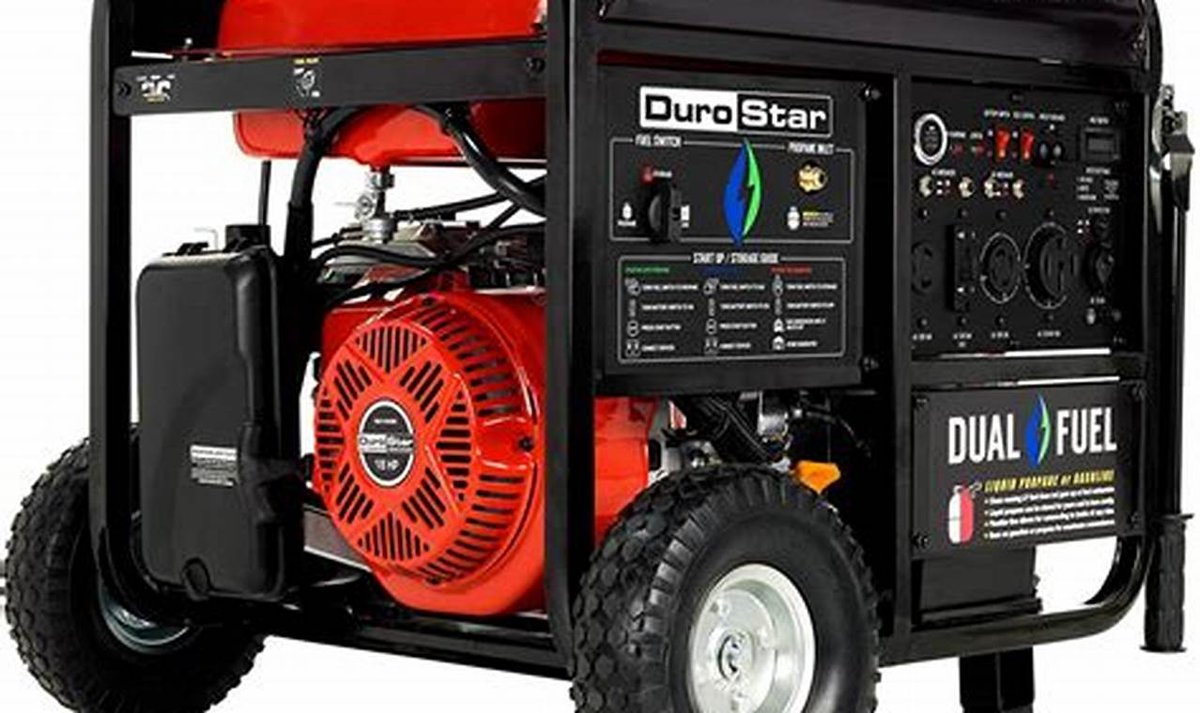
When the lights go out, the silence can be deafening, quickly replaced by the hum of dread as you realize your refrigerator is warming, your phone is dying, and that essential medical device is running on fumes. Power outages are more than just an inconvenience; they can disrupt safety, comfort, and vital routines. That's precisely why a reliable backup power source, specifically one of the Top-Rated Portable Generators for Home Use, isn't just a luxury – it's an essential part of a prepared household.
Forget the image of bulky, ear-splitting machines. Today's portable generators are smarter, quieter, and more efficient, offering a lifeline when the grid goes dark. They're designed to keep your critical appliances running, from the fridge and lights to crucial medical equipment and sensitive electronics, ensuring your home remains functional and your family safe.
At a Glance: Your Portable Generator Cheat Sheet
- Affordable Backup: A more practical and budget-friendly alternative to whole-house generators.
- Size Matters: Match generator size (watts) to your specific power needs – from essentials to most household appliances.
- Clean Power for Tech: Inverter generators are key for sensitive electronics like laptops and TVs.
- Fuel Flexibility: Gasoline is common, but dual-fuel (gas/propane) offers storage benefits and quieter operation.
- Safety First: ALWAYS operate outdoors, at least 20 feet from your home, to prevent carbon monoxide poisoning.
- Know Your Watts: Differentiate between "starting watts" (initial surge) and "running watts" (continuous power).
Why a Portable Generator Beats Total Darkness (and Expensive Alternatives)
Imagine losing power for days. Your food spoils, your family struggles without heat or AC, and communication becomes a challenge. A portable generator steps in as your immediate hero. Unlike whole-house standby generators, which can cost upwards of $10,000 for installation alone, portable models offer a significantly more affordable entry point, typically ranging from a few hundred to a couple of thousand dollars. They're also versatile, ready to power your home during an outage, or even your RV, boat, or campsite for recreational use. It's about empowering you to take control when circumstances are out of your hands, making them a cornerstone of any preparedness plan. If you're looking for the absolute best portable home generator for your specific needs, understanding the core features is your first step.
Decoding Generator Specs: Watts, Types, and What They Mean for You
Choosing the right portable generator starts with understanding its fundamental components and capabilities. It’s like picking a car – you wouldn't just look at the color, right?
The Engine and Alternator: The Heart of the Machine
At its core, every generator is a duo: an engine that burns fuel and an alternator that converts that mechanical energy into AC electrical power, typically at 120 or 240 volts. But not all power is created equal.
Standard (Open Frame) vs. Inverter Generators: Clean Power Matters
You'll generally encounter two main types:
- Standard (Open Frame) Generators: These are your traditional workhorses. They're often louder, more exposed, and can be quite heavy (often 100+ lbs, though many come with wheels and handles). Their power output can have varying degrees of "sine wave distortion." While perfectly fine for simple resistive loads like lights, heaters, or even a refrigerator, this "dirty" power can potentially harm sensitive electronics.
- Inverter Generators: These are the sophisticated siblings. They convert AC power to DC, then back to AC, using advanced circuitry to "filter" the current. The result is "clean" power – a smooth sine wave that's vital for delicate electronics like laptops, tablets, smart TVs, and medical devices. Inverters are generally more expensive, but they're also typically quieter, more fuel-efficient, and often lighter than standard generators of comparable output. If you plan to power anything with a microchip, an inverter is your best bet.
Sizing Your Needs: Starting Watts vs. Running Watts
This is where many people get tripped up. Don't just look at one number!
- Starting Watts (Peak/Surge Watts): This is the burst of power an appliance needs momentarily to start up, especially those with motors (like refrigerators, well pumps, or air conditioners). This surge can be 2-3 times higher than its running watts.
- Running Watts (Rated/Continuous Watts): This is the power an appliance needs to operate continuously once it's running.
Pro Tip: List all the appliances you absolutely need during an outage. Find their starting and running watts (usually on a sticker or in the manual). Add up the running watts of everything you want to run simultaneously, then identify the single appliance with the highest starting watts. Your generator needs to meet that total running wattage PLUS that single highest starting wattage. Don't forget a buffer!
Fueling Your Fortress: Gasoline, Propane, and Natural Gas
The type of fuel your generator uses significantly impacts its convenience, storage, and performance.
- Gasoline: The most common choice, readily available. However, gasoline has its downsides:
- Availability: During a widespread outage, gas stations might be closed or run out.
- Degradation: Gasoline degrades over time, especially with ethanol blends, potentially gumming up carburetors if left in the tank. Use a fuel stabilizer or ethanol-free gas, and run the generator dry for storage.
- Storage: Storing large quantities of gasoline can be a safety hazard.
- Propane (Dual-Fuel Generators): A fantastic alternative, offering several benefits:
- Stable Storage: Propane doesn't degrade, so you can store tanks indefinitely without worrying about engine damage.
- Clean Burn: Runs cleaner than gasoline, resulting in less engine wear and quieter operation.
- Downside: Propane offers fewer BTUs per unit, meaning a generator running on propane will have slightly reduced starting and running watts compared to running on gasoline.
- Natural Gas (Tri-Fuel Generators):
- Continuous Supply: If you have a natural gas line to your home, this offers an endless fuel supply, eliminating trips to the gas station.
- Clean & Quiet: Burns very cleanly and quietly.
- Installation: Requires a professionally installed dedicated natural gas line, making it less "portable" in that sense. Also produces fewer BTUs than gasoline.
Many of the top-rated models are "dual-fuel," offering the flexibility of both gasoline and propane, which is often the best of both worlds for home backup.
Safety Above All: Avoiding the Invisible Killer and Power Surges
This isn't just advice; it's a lifeline. Operating a portable generator carries significant risks if not handled correctly.
The Silent Threat: Carbon Monoxide (CO) Poisoning
Carbon monoxide is an odorless, invisible, and highly toxic gas produced by combustion engines. In enclosed spaces, it can be fatal in minutes.
Non-Negotiable Safety Steps:
- OUTSIDE ONLY: NEVER operate a generator indoors, in a garage (even with the door open), a shed, or any partially enclosed space.
- 20 FEET AWAY: Position your generator at least 20 feet from your house.
- EXHAUST AWAY: Ensure the exhaust is blowing away from your home, windows, and doors. Angle it downwind.
- CO Alarms: Install battery-operated CO detectors inside your home and check them regularly.
- Modern Safety Features: Many newer models come with built-in CO auto-shutoff sensors, which will power down the unit if CO levels become unsafe around the generator itself. This is a critical feature to look for.
Grounding Your Generator: When and Why
For most people using a portable generator to plug directly into its outlets (for individual appliances), grounding is generally not needed. The generator's frame itself acts as a ground.
However, if you plan to power your home's circuits directly via a manual transfer switch (installed by a licensed electrician), you MUST consult your operator's manual, a licensed electrician, and local ordinances.
- Neutral-Bonded vs. Floating Neutral: Generators can be "neutral-bonded" (the neutral wire is connected to the generator frame) or "floating neutral" (the neutral is isolated from the frame).
- Transfer Switches & GFCI: Generators with a floating neutral and those equipped with GFCI (Ground Fault Circuit Interrupter) outlets powering home circuits via a neutral switching manual transfer switch often require external grounding to a rod driven into the earth. This helps protect against electrical shock if there's a fault.
When in doubt, consult a licensed electrician. It's a small price to pay for safety and peace of mind.
How We Picked the Best (and How You Can Too)
Our recommendations aren't just based on spec sheets. We've leaned into the rigorous testing methodologies of experts like Consumer Reports (CR) and Popular Mechanics (PM), alongside extensive user feedback and our own industry insights. Here's what they (and we) look for:
- CO Safety: CR performs stringent tests for CO safety, a non-negotiable factor.
- Performance Under Load: Can the generator handle fluctuating loads (e.g., a refrigerator cycling on and off) without tripping or failing? PM uses oscilloscopes to check sine wave quality and clamp meters for voltage output.
- Ease of Starting: Electric start is a huge bonus, especially in an emergency.
- Fuel Efficiency & Runtime: How long can it run on a tank of fuel?
- Noise Level: Measured at various distances (PM tests at 2 ft and 25 ft, idling and under load) – a quieter generator is a better neighbor and less stressful.
- Portability: Weight, wheels, and handles make a big difference for generators over 50 lbs.
- Output Versatility: Are there enough and the right types of outlets (120V, 240V, 30-amp RV, USB)?
- Value: Balancing features, performance, and price.
- Reliability: Long-term durability and brand reputation.
Our Top Picks: Battle-Tested Portable Generators for Home Use
Based on rigorous testing, versatility, and real-world performance, here are some of the standout portable generators that earn our highest marks for home use.
1. Honda EU2200i: The Quiet, Clean Power King (Best Overall)
- Why it stands out: Honda is synonymous with reliability, and the EU2200i is the gold standard for small, quiet, clean power. It's an inverter generator, meaning pristine power for all your sensitive electronics.
- Key Features: Remarkably quiet (68.9-81.2 dB, making conversations possible nearby), extremely portable (half the size and weight of many competitors at just under 47 lbs), fully enclosed design, fuel shutoff valve, and a gas cap vent for safety.
- Power: 2,200 starting watts / 1,800 running watts. Its "parallel capability" allows you to link two EU2200i units for double the output (4,400 starting watts).
- Ideal for: Camping, tailgating, and essential home backup (lights, small fridge, charging devices, medical equipment). It won't run your central AC, but it'll keep critical items humming.
- Considerations: Higher price point for its output, gasoline-only.
2. Champion 4,750-watt Dual-Fuel: Your Best Bang for the Buck (Best Value)
- Why it stands out: Champion consistently delivers reliable power at an unbeatable price, and this dual-fuel model brings crucial versatility.
- Key Features: Dual-fuel capability (gasoline or propane), robust open-frame design, a handy 30-amp, 120V RV receptacle, and an electric start option (battery included) for easy firing up.
- Power: 4,750 starting watts / 3,800 running watts (gasoline); slightly less on propane. More than enough for 3-4 critical 120V home circuits or a small-to-medium RV.
- Ideal for: Budget-conscious homeowners needing solid power for essential appliances (refrigerator, lights, furnace fan, TV) or RV enthusiasts.
- Considerations: No 240V outlets, open-frame design means it's louder than inverters and not ideal for sensitive electronics without additional surge protection.
3. WEN DF360iX Dual-Fuel Inverter: Lightweight & Budget-Friendly Clean Power (Best Budget)
- Why it stands out: Wen continually impresses with feature-rich, affordable options. This dual-fuel inverter is a standout, offering clean power and portability for under $500.
- Key Features: Dual-fuel (gasoline/propane), inverter technology (clean power), lightweight at just 49 lbs, multiple outlets (30-amp RV, AC, DC, USB-A), and impressively quiet (~65 dB). Includes a CO sensor for safety and low-fuel auto-shutoff.
- Power: 2,900 starting watts / 2,600 running watts (gasoline); 2,600 starting watts / 2,340 running watts (propane).
- Ideal for: Anyone needing clean power for sensitive electronics, small home backup, camping, or tailgating without breaking the bank.
- Considerations: Small 1.5-gallon fuel tank (about 5 hours runtime on gasoline), though a 20-lb propane tank can last up to 14 hours.
4. Generac iQ3800 Dual-Fuel Inverter: Smart Power for Sensitive Electronics
- Why it stands out: Generac is a major player in the generator market, and their iQ3800 offers premium inverter features with user-friendly controls.
- Key Features: Dual-fuel, delivers "clean" power (<3% THD, Total Harmonic Distortion, which is excellent for sensitive electronics), one of the quietest in its size class, easy operation with electric start, auto choke, and an intuitive LED display.
- Power: 3,800 starting watts / 3,400 running watts (gasoline); 3,400 starting watts / 3,000 running watts (propane).
- Ideal for: Homeowners who prioritize ultra-clean power for computers, smart devices, and high-end electronics, alongside essential appliances, and appreciate quiet operation.
- Considerations: Higher price point, relatively heavy for an inverter in this wattage class.
5. Pulsar 7,250-Watt Dual-Fuel Inverter: High Power, High Versatility
- Why it stands out: This Pulsar model defies expectations by combining high wattage with inverter technology and dual-fuel capability, a rare and valuable combination.
- Key Features: True inverter technology (claimed <3% THD for super clean power), dual-fuel, stable frequency (59.97-60.09 Hz), robust frame with wheels and handles for portability. Crucially, it provides 240V output.
- Power: 7,250 starting watts / 6,250 running watts (gasoline); 6,500 starting watts / 5,500 running watts (propane). Can run up to 5,500W at 240V.
- Ideal for: Those who need significant power for multiple essential circuits, including larger appliances or even small 240V loads (like a well pump or limited central AC), while still requiring clean power for electronics.
- Considerations: Larger and heavier than smaller inverters, but impressively compact for its output.
6. Harbor Freight Predator 9,500-Watt Inverter: Capacity King with a Quiet Roar (Best Capacity)
- Why it stands out: The Predator 9500 offers immense power in an inverter package that's surprisingly quiet and portable for its size, often at a competitive price point.
- Key Features: High-capacity inverter for clean power, very quiet operation (especially for its output), highly portable for a large unit (includes sturdy wheels and a fold-out handle), comes with versatile plug ends.
- Power: 9,500 starting watts / 7,600 running watts. Capable of powering most critical circuits in a modest home, including a central AC unit (depending on size).
- Ideal for: Homeowners needing substantial backup power to run multiple heavy-draw appliances simultaneously, including 240V loads, while still protecting sensitive electronics.
- Considerations: While portable for its capacity, it's still a large and heavy unit. Not dual-fuel.
Your Generator Decision Checklist: What to Ask Yourself
Before you commit to a purchase, run through these questions:
- What are your non-negotiable appliances? (Fridge, freezer, lights, phone chargers, medical devices, furnace fan, well pump, window AC?)
- Do you have sensitive electronics? (If yes, an inverter generator is a must.)
- What's your fuel priority? (Gasoline for simplicity, propane for storage, natural gas for continuous supply?)
- How much noise can you tolerate? (Inverters are generally much quieter.)
- How portable does it need to be? (Will you move it often, or is it mostly stationary for home backup?)
- What's your budget? (High-end inverters offer more features but come at a premium.)
- Are safety features like CO auto-shutoff important to you? (Highly recommended.)
- Do you need 240V outlets for larger appliances?
Keeping Your Powerhouse Ready: Maintenance Tips
A portable generator is an investment in peace of mind, but like any engine, it needs care.
- Read the Manual: This cannot be stressed enough. It contains specific instructions for your model.
- Regular Exercise: Run your generator under a light load for 20-30 minutes every month or two. This keeps the engine lubricated and the fuel system clear.
- Fuel Management: If using gasoline, always add fuel stabilizer before storage. For extended storage (over 30 days), it's best to run the carburetor dry to prevent gumming, or use ethanol-free gasoline. Propane doesn't have this issue.
- Oil Changes: Follow the manufacturer's recommendations for oil type and change intervals. The first oil change is often recommended sooner than subsequent ones.
- Spark Plugs & Air Filters: Inspect and replace these as needed.
- Cleanliness: Keep the generator clean and free of debris, especially around cooling fins and air intakes.
Empowering Your Home: Be Ready, Be Safe
Choosing the right portable generator for your home use isn't just about picking a piece of equipment; it's about investing in resilience. When the next storm hits, or an unexpected outage leaves your neighborhood dark, you'll be prepared, not powerless. By understanding your needs, prioritizing safety, and selecting a top-rated model, you'll ensure your home remains a haven, no matter what comes your way. Get informed, get prepared, and secure your peace of mind.